
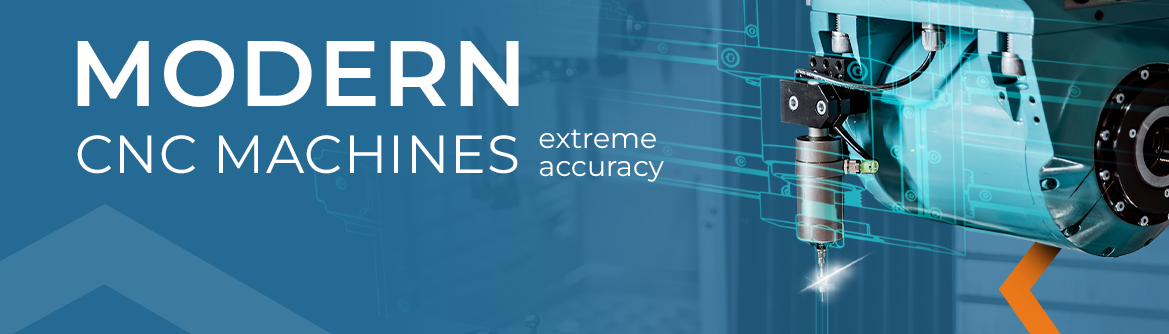
Modern CNC machines are capable of achieving incredibly high precision — with tolerances as tight as ±0.002 mm, which is roughly 25 times thinner than a single human hair! 💡 This level of accuracy is not just a technical feat; it represents the ability to control every movement of cutting tools, spindles, and workpieces at an almost microscopic scale. By precisely coordinating machine motion, tool paths, and feed rates, CNC systems can consistently produce parts that meet exact specifications, even in highly complex geometries.
Such extreme precision allows manufacturers to create components that fit together perfectly, eliminating errors that could accumulate in assembly or production lines. Whether producing miniature gears, aerospace components, medical devices, or high-performance automotive parts, CNC machining ensures that each element aligns perfectly with the others, guaranteeing both functionality and durability.
But precision is not merely impressive — it is absolutely essential in many industries. In aerospace, a misaligned turbine blade or an improperly sized fastener can affect engine efficiency or even compromise flight safety. In automotive manufacturing, tolerances that seem minuscule on paper can translate into vibrations, premature wear, or reduced fuel efficiency if not controlled rigorously. In high-tech and electronics manufacturing, components often need to integrate with others at micron-level scales, where even the slightest deviation can render a product nonfunctional.
CNC technology provides more than just repeatable accuracy. It enables manufacturers to maintain consistency across large production batches, reduce material waste, and minimize the need for manual rework. Advanced machines can operate continuously with automated quality checks, adjusting tool paths in real time based on sensor feedback. This combination of precision, reliability, and efficiency makes CNC machining a cornerstone of modern engineering and manufacturing.
Moreover, the ability to achieve such tight tolerances opens the door to innovation. Engineers can design complex parts that would be impossible to produce with traditional manual methods. Intricate shapes, internal channels, and multi-material assemblies become feasible, supporting the development of next-generation products across industries from robotics and medical devices to aerospace and high-performance automotive engineering.
Ultimately, CNC machining doesn’t just make parts — it ensures that critical systems operate safely, efficiently, and reliably, turning engineering concepts into practical, high-quality reality. By combining extreme precision with advanced process control, manufacturers can meet the ever-increasing demands of modern industry and deliver products that perform flawlessly in the most challenging applications.