An Academic Foundation That Went Beyond the Classroom
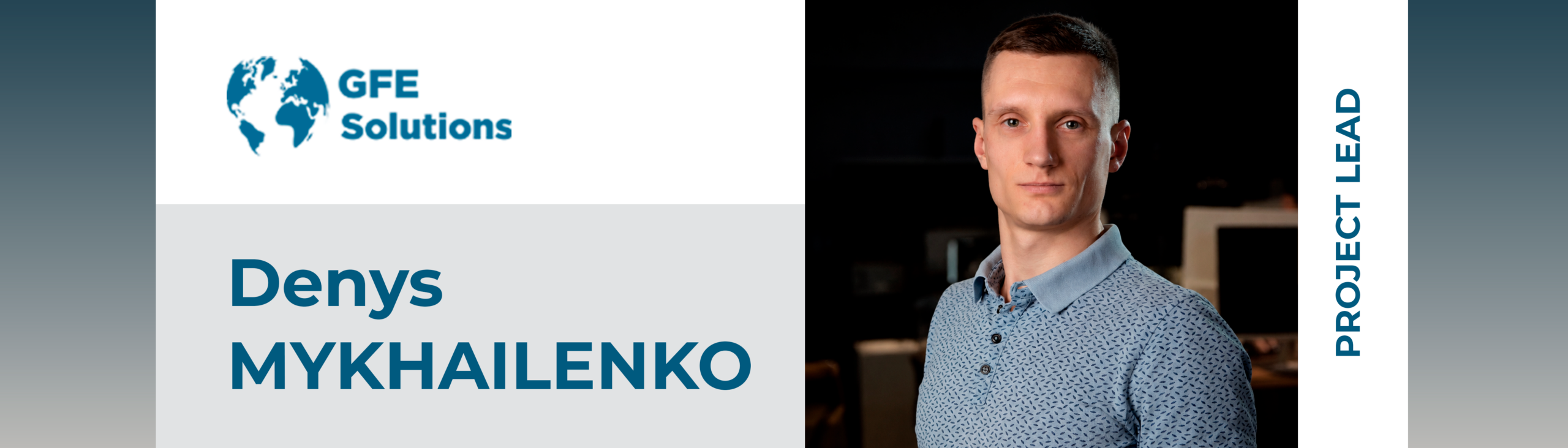
Denys Mykhailenko studied at Pryazovskyi State Technical University in Mariupol, Faculty of Mechanical Engineering, where he completed a Master’s degree in lifting, transport, road-building, reclamation and construction machinery and equipment – a specialisation that sits at the intersection of mechanical design, structural analysis, and the specific demands of heavy industrial systems. He graduated with honours.
During his studies, he won the All-Ukrainian competition for student scientific works and became the author of a registered utility model patent. These are not routine academic achievements. They indicate someone who treated the research dimension of engineering education seriously and produced work that was recognised as having genuine technical merit – not just work that satisfied the formal requirements of a degree program. The combination of honours graduation, a national competition win, and a patent application in the same period suggests someone for whom the academic environment was an opportunity to develop real capability rather than simply to accumulate credentials.
Where the Real Education Happened
After graduating, Denys joined a machine building enterprise as a Design Engineer. The company specialised in equipment for the metallurgical industry – a sector that demands engineering work at the serious end of the mechanical engineering spectrum. The product range covered cranes and lifting systems, steel structures, steel carriers for metallurgical plants, machinery for blast furnace and converter shops, and special gearboxes. These are not light industrial products. They are heavy, complex systems that operate in demanding environments under significant loads, often with direct safety implications if the engineering is inadequate.
The experience was valuable in a specific way that is difficult to replicate in less demanding environments: it required engineering decisions to be right, not just acceptable. A gearbox for a metallurgical plant that fails in service is not a minor inconvenience. A crane in a steel plant that develops a structural problem has consequences that go well beyond the cost of the repair. Engineering in that environment develops a different relationship with technical standards and design rigour than engineering in environments where the consequences of errors are more forgiving.
What made Denys’s experience at this company particularly formative was its full-cycle nature. He was involved in projects from initial concept and design through production, installation, and commissioning at the customer’s site. Most engineers in industrial product companies work within a defined phase of that cycle – design engineers do the design, production engineers handle manufacturing, and commissioning specialists handle the on-site work. Having genuine involvement across all phases produces a qualitatively different understanding of how design decisions translate into manufacturing requirements and on-site realities.
Learning From the Largest Plants in Ukraine
Over the course of his work at the machine building enterprise, Denys visited many of the largest metallurgical plants in Ukraine. These visits weren’t observation trips – they were working engagements, where he was present as a design engineer to support installation, commissioning, and direct interaction with the production teams and end users who would operate the equipment.
That kind of direct exposure to industrial reality is something that engineering education cannot provide and that most engineering careers provide only partially. Understanding how equipment behaves in the environment where it actually operates – how operators interact with it, what maintenance reality looks like, what the production environment imposes on the equipment beyond the formal specification – requires being present in that environment and paying attention to what it reveals.
For Denys, these visits accumulated over years into a body of practical knowledge that sits alongside the formal engineering training. When he makes a design decision today, the question of how it will actually behave in a production environment – not just how it will perform in the model – is one he has enough experience to answer from direct observation rather than from assumption.
Technical Tools and Broader Development
Denys has completed advanced training in PTC Creo Parametric and Windchill for CAD and product data management, and in strength analysis using both Creo Simulate and Ansys. The combination of a serious CAD platform with integrated simulation capability and a dedicated FEA tool covers the analytical range from parametric design optimisation to detailed structural and dynamic analysis – the tools that the kind of heavy industrial engineering work he has done most of his career genuinely requires.
He also participated in an MBA training program. For an engineer with the technical depth that Denys has developed, broadening the perspective to include project coordination, organisational processes, and the commercial dimension of engineering work is a deliberate investment in becoming a more complete engineering professional – one who can lead projects effectively as well as solve technical problems.
His approach to work is meticulous and structured, with strong attention to detail and a clear focus on engineering standards. He values responsibility and professionalism, and treats continuous development not as an abstract principle but as a working habit that defines how he approaches projects and contributes to the work around him.
Contributing at GFE Solutions
At GFE Solutions, Denys leads engineering projects with a combination of technical depth and practical awareness that comes directly from the kind of career he has built. He contributes to solving complex mechanical challenges and ensures that design decisions are grounded in production feasibility and long-term performance – not just in what works in the model.
The value of having someone with that background on a project is most visible in the decisions that get made early, when the geometry is still being developed and the consequences of design choices haven’t yet become locked in by downstream commitments. An engineer who has seen how industrial equipment actually gets built and how it performs in service brings a different perspective to those early decisions than one whose experience has been primarily analytical. The questions Denys raises at the concept stage – about manufacturability, about assembly sequence, about the maintenance access that the production team will need – reflect a career spent at the intersection of engineering theory and industrial reality.
Working on a complex mechanical engineering challenge?
We provide engineering capacity across CAD, FEM, structural analysis and more – for manufacturers who need qualified people on a defined scope.
Talk to an engineer
Outside of Work
Outside of work, Denys maintains an active and varied life. Volleyball has been a consistent part of it throughout his career – the kind of team sport that suits someone whose professional work also depends on functioning well within a team under pressure. He also plays table tennis, cycles, skis, and travels when the opportunity arises.
He is interested in theatre and cultural activities, studies foreign languages, and reads books focused on personal and professional development. The combination reflects someone who takes the same structured, deliberate approach to how he spends his time outside work as he does to the engineering problems he works on – curious, engaged, and oriented toward continuous improvement across multiple dimensions of his life.