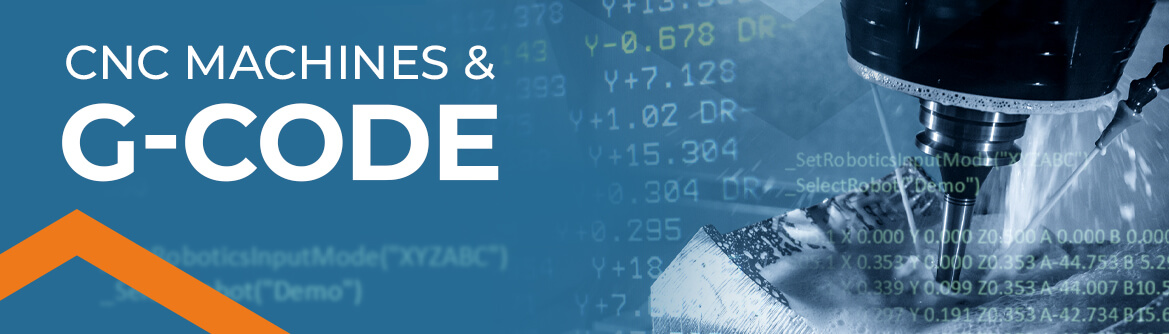
All CNC machines operate using a universal programming language known as G-code. First developed in the 1950s, this structured command system remains the foundation of modern CNC machining. Despite decades of technological advancement in hardware, software interfaces, and simulation tools, the core logic of G-code continues to define how machines interpret and execute instructions.
At its essence, G-code provides clear, sequential commands that guide a machine tool through every stage of a machining operation. Each line of code defines a specific action. It instructs the machine where to move, how fast to travel, which tool to activate, what spindle speed to apply, and how to perform a given operation. These commands are not abstract digital signals; they directly control physical motion, cutting forces, and material removal processes.
The durability of this programming standard demonstrates the strength of its original design. Although controllers have evolved and user interfaces have become more intuitive, the underlying logic remains consistent. G-code continues to translate engineering intent into controlled mechanical action with structured clarity.
Modern manufacturing often begins with a three-dimensional digital model created in CAD software. This model defines geometry, tolerances, and assembly relationships. However, a digital model alone cannot shape raw material. It must be translated into instructions that a machine tool can execute step by step.
This translation process occurs through CAM software, which converts geometry into toolpaths. These toolpaths are then expressed as G-code commands. The result is a structured file containing precise coordinates, feed rates, spindle parameters, and tool changes. Each instruction forms part of a larger sequence designed to remove material in a controlled manner.
When a CNC machine reads G-code, it does not interpret the final shape as a whole. Instead, it processes each line sequentially, executing movements and operations exactly as defined. This incremental logic ensures that the finished component matches the intended design within specified tolerances. The connection between digital planning and physical execution depends entirely on the clarity and accuracy of the programmed commands.
Even minor variations in code structure can influence machining outcomes. A small change in feed rate affects surface finish. An adjustment in toolpath strategy influences material stress and machining time. This level of control is what allows CNC technology to achieve consistent and repeatable results across production runs.
G-code operates through a structured system of coordinates and operational instructions. Commands such as linear interpolation, circular movement, rapid positioning, and tool compensation are defined explicitly within the program. Each parameter contributes to overall machining accuracy.
The machine controller interprets coordinate data relative to defined reference points. These reference systems ensure that every movement is measured and executed within a controlled spatial framework. When properly configured, this system enables machining processes that meet strict dimensional requirements across industries.
Consistency is one of the defining strengths of CNC machining. Once a G-code program is validated, it can be executed repeatedly with minimal variation, provided that machine conditions remain stable. This repeatability supports mass production as well as small batch manufacturing, where precision must be maintained from the first component to the last.
Structured command sequences also improve traceability. Programs can be archived, reviewed, and optimized over time. Adjustments can be documented and tested in simulation before being applied in production. This disciplined approach strengthens quality control and supports continuous improvement in machining operations.
G-code enables manufacturing across a wide range of sectors. In aerospace production, it guides the machining of structural components that must meet demanding dimensional standards. In automotive manufacturing, it supports high-volume production of engine parts, transmission housings, and structural assemblies. In mechanical engineering, it enables the fabrication of intricate systems with precise interfaces and complex geometries.
Regardless of industry, the underlying principle remains consistent. Digital engineering data is translated into a logical sequence of commands that instruct a machine how to interact with material. The effectiveness of this translation determines machining efficiency, surface quality, and dimensional accuracy.
High-precision production environments depend on this predictable interaction between software and hardware. Machines equipped with modern controllers may offer advanced visualization tools and automated calibration features, yet the fundamental communication layer continues to rely on G-code syntax and structure.
The longevity of this programming standard demonstrates its adaptability. While supplementary codes and extended functions have been introduced over the years, the essential command architecture remains recognizable. This continuity allows engineers and programmers to apply established knowledge across generations of equipment.
Let’s discuss how structured CNC programming and process analysis can improve machining performance and production efficiency.
Although G-code follows a defined syntax, effective CNC programming requires deep technical understanding. Programmers must consider material behavior, cutting tool characteristics, machine dynamics, and fixture stability. A well-structured program reflects careful planning rather than automated output alone.
Decisions regarding toolpath strategy influence machining time and surface integrity. Proper sequencing reduces unnecessary tool changes and improves workflow efficiency. Clear code organization simplifies troubleshooting and later modification. These factors demonstrate that programming quality directly affects production performance.
Simulation tools allow programs to be verified before execution, reducing the risk of collision or dimensional error. However, final validation always depends on practical understanding of machine behavior under real operating conditions. Expertise bridges the gap between theoretical planning and operational execution.
Over time, optimized G-code programs become valuable production assets. They represent accumulated knowledge regarding machining parameters, tool wear patterns, and process stability. Maintaining and refining these programs contributes to long-term manufacturing efficiency.
More than half a century after its introduction, G-code remains central to CNC machining. Its structured logic, clarity of instruction, and adaptability across equipment types have ensured its continued relevance. While digital manufacturing continues to evolve, the fundamental principle of translating design into sequential machine commands remains unchanged.
The ability to convert complex digital models into precisely machined components depends on this programming foundation. From single prototypes to high-volume production runs, G-code provides the operational structure that makes automated manufacturing possible.
Understanding this language is essential for any organization seeking to improve machining performance or expand production capability. It connects engineering design, process planning, and physical execution into one coordinated workflow.
At GFE Solutions, we apply disciplined CNC programming practices that align digital design intent with controlled machining operations. By combining structured code development with technical expertise, we support manufacturing processes that deliver consistent and accurate results across industries.
NEWSLETTER
More articles from GFE Solutions – engineering insights, case studies, and team stories.

GFE Solutions is a specialized engineering services company. Our engineers are mainly from Eastern Europe – to our customers we offer onsite- and offsite-engineering-services. All our specialists speak and write fluently English, some of them German and other languages.
Phone: +48 798 763 604
For general enquiries: info@gfe-solutions.com
For commercial requests: inquiry@gfe-solutions.com


Subscribe to our newsletter and keep in touch with us
Copyright © 2019-2026 Global Flexible Engineering Solutions. All rights reserved.