Precision at the Level of 0.01 Newtons
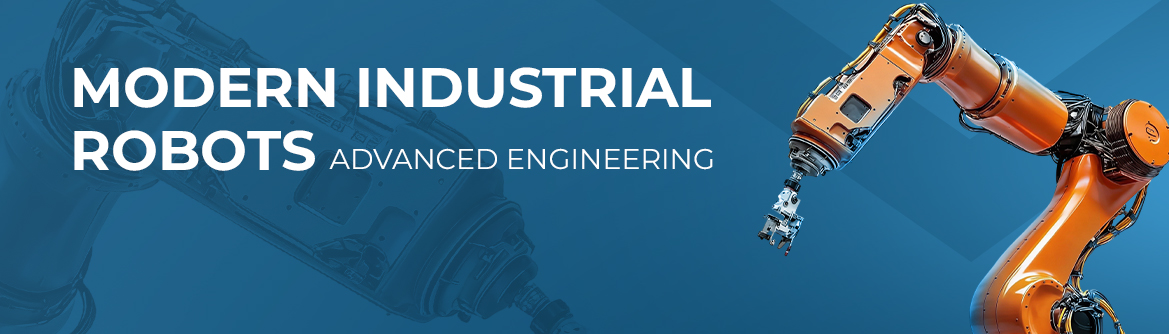
Did you know that modern industrial robots can detect force and torque with remarkable sensitivity, often down to 0.01 Newtons? Such precision is made possible through integrated force sensors and carefully tuned feedback loops embedded within the robot’s joints and end effectors. These systems continuously measure interaction forces and instantly transmit data to the control unit, where adjustments are calculated in fractions of a second.
This level of control transforms how robots operate in real production environments. Instead of following rigid movement paths without awareness of contact conditions, robots can “feel” resistance, detect misalignment, and respond dynamically. The mechanical structure, sensor technology, and control algorithms function together as a unified system that interprets physical interaction in real time.
The result is not simply accurate positioning in space. It is controlled physical interaction with objects, materials, and components under varying conditions.
From Rigid Motion to Intelligent Interaction
Traditional automation systems were designed primarily for repeatable motion. They moved components from point A to point B with high positional accuracy but limited awareness of applied force. This approach works well for handling, welding, or painting tasks where controlled trajectories are sufficient.
However, delicate assembly operations require more than precise positioning. Inserting a connector into a housing, pressing a bearing into a seat, or aligning small mechanical parts demands controlled force application. Too much pressure may damage components. Too little force may result in incomplete assembly.
Force and torque sensing enable robots to adapt during contact. When resistance exceeds a defined threshold, the system can adjust speed, modify direction slightly, or pause the operation for verification. This adaptive capability reduces scrap, minimizes component damage, and ensures stable assembly quality across large production volumes.
In practical terms, robots can now perform operations that once depended heavily on experienced human operators who relied on tactile feedback and intuition. While human expertise remains essential in many areas, automation systems increasingly support tasks that demand both precision and controlled interaction.
Planning advanced robotic automation?
Let’s discuss how precision sensing and control logic can improve accuracy, safety, and process stability in your production line.
Talk to Our Engineers
Sensors, Mechanics, and Control Logic Working Together
The performance of modern robotic systems depends on the interaction between mechanical design, sensing technology, and control architecture. High-resolution force sensors provide accurate data. Rigid and well-calculated mechanical structures ensure predictable behavior under load. Control algorithms interpret sensor signals and convert them into precise motion corrections.
Feedback loops play a central role in this process. They continuously compare measured values with target parameters and initiate corrective actions when deviations occur. This happens rapidly and repeatedly throughout each movement cycle. As a result, robots maintain consistent contact force even when component tolerances vary or environmental conditions change slightly.
This combination enhances not only precision but also operational safety. If unexpected resistance or obstruction is detected, the system can stop or reduce force immediately. Such responsiveness protects both equipment and personnel, particularly in collaborative environments where robots operate near human workers.
Beyond Movement: Intelligent Industrial Systems
Modern automation systems are no longer limited to predefined motion paths. They interpret physical feedback and adjust accordingly, allowing them to interact intelligently with their surroundings. This capability expands the range of tasks suitable for robotic implementation, especially in industries where component variation is unavoidable.
For manufacturers, this means improved process consistency and reduced dependency on manual adjustments. Production lines become more stable because robots can compensate for minor deviations automatically. Over time, such stability contributes to predictable cycle times and consistent product quality.
The integration of precise sensing with advanced control logic demonstrates how engineering progress enhances automation performance. Robots are not merely machines that move. They are systems designed to understand interaction forces and respond appropriately, enabling more sophisticated and controlled production processes.