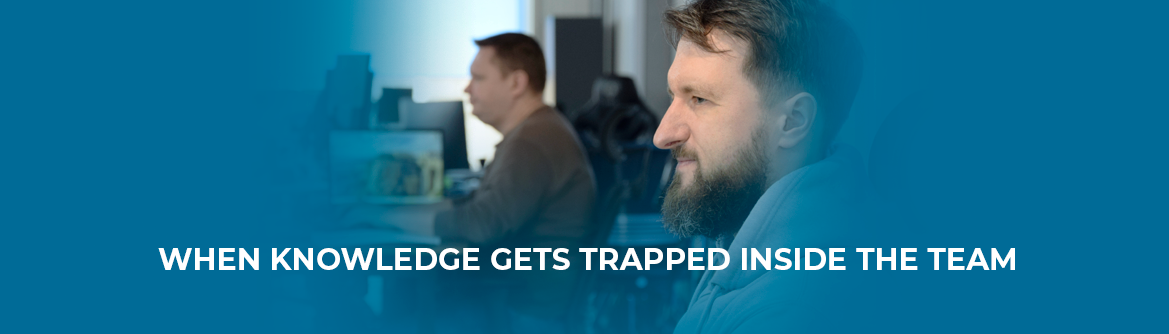
When Engineering Knowledge Exists Only in People’s Heads
In many engineering teams, a large portion of critical knowledge exists informally. It lives in the experience of a few engineers who have worked on a project for years, who remember why certain design decisions were made, and who understand how different parts of a system interact. Their understanding is often built through practical involvement rather than written documentation. They know the background of each component, the reasoning behind design changes, and the lessons learned from previous iterations.
While this expertise is extremely valuable, it can also create hidden risks for a project. When essential knowledge is concentrated in only a few individuals, the continuity of engineering work becomes closely tied to their availability. If these specialists are overloaded with tasks, temporarily absent, or move to another company, progress can slow down quickly. Teams may struggle to reconstruct earlier decisions or understand how a system is supposed to function in detail.
This situation is more common than many organizations expect. Fast project timelines often encourage teams to focus on immediate delivery rather than long-term knowledge structure. As a result, valuable experience accumulates in conversations, personal notes, and individual memory instead of becoming part of a shared engineering framework.
The Hidden Risk of Knowledge Dependency
When engineering processes depend too strongly on individual expertise, projects become vulnerable to disruptions. Even a short absence can create uncertainty if other team members are unsure how to continue the work. Questions about design assumptions, calculation methods, or system integration may remain unanswered until the responsible engineer becomes available again.
In complex industrial projects, this type of dependency can influence multiple disciplines simultaneously. Mechanical layouts, automation logic, material specifications, and production processes are often interconnected. If the reasoning behind these elements is not clearly documented, it becomes difficult for others to understand the full system context.
Over time, this can slow down development, complicate troubleshooting, and reduce the flexibility of the engineering team. Instead of focusing on improvement and innovation, valuable time is spent trying to rediscover information that once existed but was never properly structured.
Engineering knowledge is most powerful when it can be shared, reviewed, and expanded by multiple specialists. When information remains locked inside individual experience, the entire organization becomes less resilient.
Looking for additional engineering support?
External engineers can help document processes, structure project knowledge, and keep development moving without interruptions.
Discuss Your Project
Why Structured Documentation Matters
Documenting engineering knowledge transforms individual experience into a collective resource. When design decisions, calculation methods, and system logic are clearly described, teams gain a stable reference point for future work. New engineers can understand previous steps more quickly, and existing specialists can collaborate more effectively without repeatedly explaining the same information.
Structured documentation also improves transparency within projects. When requirements, design assumptions, and verification results are recorded systematically, it becomes easier to review decisions and ensure that technical expectations are met. This clarity is especially valuable in large industrial environments where multiple teams and suppliers are involved.
Documentation does not replace expertise. Instead, it amplifies it by making knowledge accessible to the entire engineering organization. Engineers remain responsible for analysis and decision-making, but their insights become part of a shared system that supports future development.
Creating Resilient Engineering Teams
Reducing dependency on individual specialists does not mean diminishing their importance. Experienced engineers remain central to every successful project. The goal is not to replace their expertise, but to ensure that their knowledge strengthens the entire team rather than remaining isolated.
When information is properly structured and documented, teams become more resilient. Work can continue even when key individuals are unavailable. Engineers can support each other more effectively, and project timelines become less vulnerable to unexpected disruptions.
This approach also supports long-term organizational development. As companies grow, projects become more complex and collaboration expands across departments and locations. Having clear documentation and structured knowledge allows teams to adapt more easily and maintain consistent engineering quality.
Engineering success is rarely the result of isolated effort. It emerges from collaboration, shared understanding, and well-organized technical information. By transforming individual experience into structured knowledge, organizations create an environment where projects can move forward with greater stability and confidence.