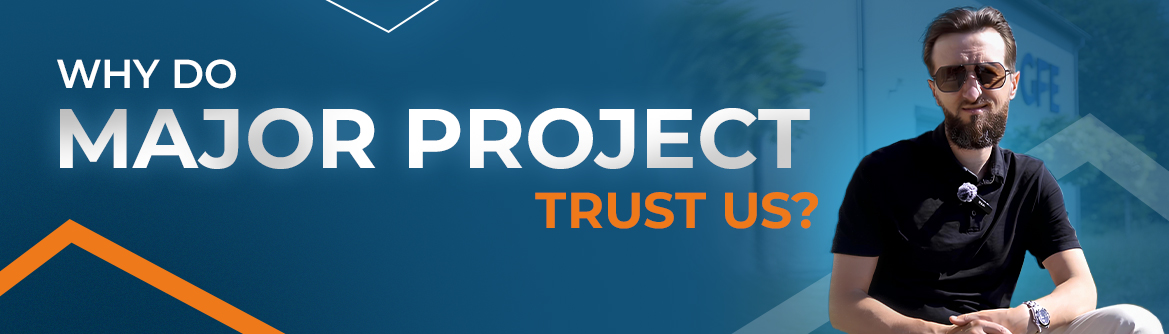
Building GFE Solutions: A Conversation with Co-Founder and CEO Yehor Kozlov
Most business interviews follow a predictable format: polished answers, well-rehearsed talking points, and a narrative that mirrors the company’s official positioning. This conversation with Yehor Kozlov, Co-Founder and CEO of GFE Solutions, was different.
Rather than walking through the company timeline or outlining product features, the discussion focused on the questions that rarely make it into formal presentations — what the mission genuinely means to him, what it costs to enter new markets, and what keeps a founder going when the pressure becomes difficult to manage. His answers were direct, considered, and occasionally unexpected.
On the Mission Behind the Business
When asked to describe GFE Solutions’ mission without relying on official language, Kozlov paused before answering. The version he gave was noticeably different from what appears on the company website — more personal, more specific, and grounded in the kind of thinking that shapes daily decisions rather than investor decks.
For Kozlov, the mission is less about a statement and more about a standard. It reflects how the team approaches each project, how they communicate with clients, and what they consider non-negotiable when the workload increases or timelines tighten.
On Entering New Markets
Expanding into new markets is a topic most companies address optimistically in their communications. In practice, the experience is considerably more complex. Kozlov was candid about the specific challenges GFE Solutions encountered — not the structural or strategic ones that consultants typically document, but the quieter, more persistent difficulties that only become visible from the inside.
He described the gap between what a company expects when entering a new market and what actually happens once the work begins. According to Kozlov, the most difficult part is rarely the technical or operational side. More often, it is the time required to understand the local context well enough to be genuinely useful — and the patience required to build credibility before visibility.
Watch the Full Interview
Yehor Kozlov discusses GFE Solutions’ mission, the realities of market expansion, company culture, and what drives him when things get genuinely hard.
Watch Now
On the Value That Isn’t Immediately Visible
One of the more striking moments in the conversation came when Kozlov was asked about the value GFE Solutions delivers that clients do not immediately see. His answer pointed to a pattern the company has observed repeatedly: the work that has the most lasting impact is often the work that takes the longest to be recognized.
Clients typically notice the deliverables. What they notice later — sometimes months into the engagement — is the quality of the decisions that shaped those deliverables, the problems that were identified and addressed early, and the consistency of execution across the entire scope of work. According to Kozlov, this is the part of the service that is hardest to explain in advance and most clearly understood in retrospect.
On Company Culture and How It Is Maintained
Shaping a company culture is straightforward when a team is small and conditions are stable. Maintaining it as the team grows, markets shift, and workload increases is a different challenge. Kozlov described his approach as deliberate rather than instinctive — a set of consistent behaviors and expectations that the leadership team models and reinforces, rather than a set of values written on a wall.
He was particularly direct about the connection between culture and performance. In his view, the quality of the work GFE Solutions delivers is inseparable from the environment in which that work is produced. When the environment deteriorates — when communication becomes unclear, expectations become unrealistic, or people feel their contribution is not recognized — the quality of the output follows.
On What Keeps Him Going
The final question in the interview was also the one that produced the most considered response. Asked what gives him the energy to continue when things become genuinely difficult, Kozlov did not reach for a motivational answer. Instead, he described something more specific — a combination of responsibility toward the people on his team, the belief that the work matters, and a practiced ability to separate short-term pressure from longer-term perspective.
His answer was not about resilience as a trait. It was about resilience as a choice made repeatedly, under circumstances where the easier option is to reduce expectations or walk away from the harder problems. For anyone who has managed a team, run a project under pressure, or built something from the ground up, that distinction is a familiar one.